7 Common Mistakes to Avoid When Buying Handmade Ceramics
A good mug tells you what it is before you fill it. You pick it up and the weight sits where your hand expects. The rim is thin but not fragile. The glaze shifts slightly in the light, darker in the recesses, so you can see where a finger once ran. Buying handmade ceramics is mostly a matter of noticing those things — and of asking the two or three questions that separate a piece you will reach for every morning from one that ends up at the back of the cupboard by spring.
What follows are the mistakes we see most often at craft markets, studio open days and small online shops, along with the checks that help you avoid them.
1. Judging a piece with your eyes only
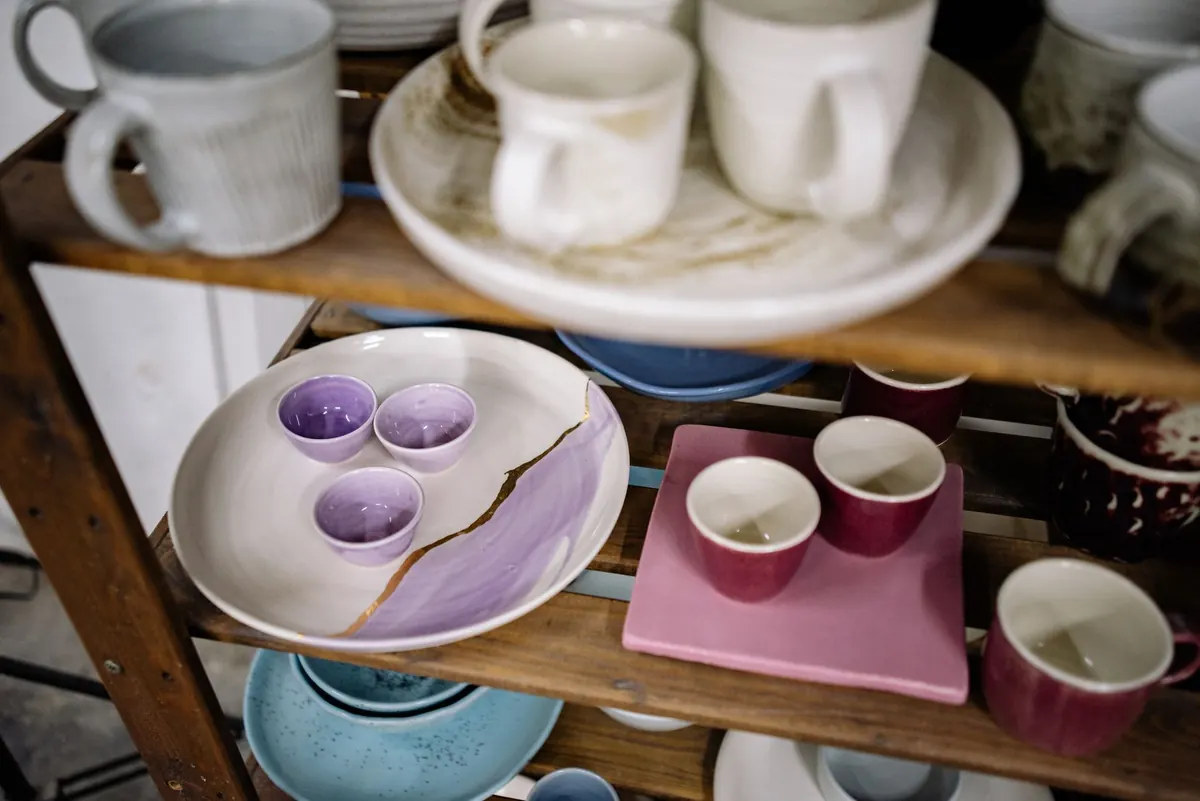
Photographs flatter pottery. A glaze that looks deep and lustrous on a screen can feel slick and thin in the hand. Whenever you can, pick the piece up. Turn it over. Run a thumb around the rim and along the foot ring — the unglazed ring on the base that sits on the table.
A few seconds of handling tells you a great deal. Set the piece on a flat surface and press gently on opposite sides of the rim; it should sit still, not rock. Check that the base has been sanded smooth, so it will not scratch a wooden table. If it has a handle, hook two fingers through it and lift. The handle should feel like it belongs to the pot, not like a separate piece glued on, and there should be no sharp seam where it meets the body.
2. Assuming "handmade" means one particular technique
Handmade covers a wide range. A potter might throw a mug on the wheel, build a plate from slabs, or cast a form in a plaster mould and finish it by hand. None of these is dishonest, and a well-made cast piece can be better than a badly thrown one. The problem is not the technique; it is not knowing what you are buying.
So ask. Most makers are delighted to explain. "Was this thrown?" is a perfectly good opening question, and the answer usually comes with a story about the clay body, the glaze recipe, or the fact that three of the last ten came out of the kiln with a flaw and went into the seconds box. That conversation is worth more than any label.
Questions that get useful answers
- How was this made — wheel, slab, mould, or a mix?
- Is this glaze mixed in the studio, and has it been tested for food use?
- Can this go in the dishwasher or microwave?
- Is this a one-off, or can you make more of the same?
3. Skipping the questions about food safety and daily use
A piece you will eat from needs a straight answer about what is on it. Ask directly whether the glaze is intended for food contact, and whether the inside surface is fully covered. Matte and heavily textured glazes can stain or hold onto oils over time; that is not a defect, but it is something to know before you commit a bowl to tomato sauce.
Also ask about heat. Many stoneware pieces are fine in a dishwasher, while some hand-painted or low-fired work is not. And a piece that has survived a kiln can still crack if it goes from a hot oven to a cold counter, so check the maker's advice rather than guessing. If you have particular concerns about glazes or materials, ask the maker for specific details and take advice from a qualified professional where it matters to you.
4. Missing the small flaws that predict bigger failures
Some flaws are part of the character of handmade work: a slight asymmetry, a thumbprint, a patch where the glaze ran thin. Others are early warnings. Learn to tell them apart.
- Crazing: a fine web of cracks across the glaze, like ice on a window. It can happen over time and is sometimes considered decorative, but on a food surface it is worth asking about.
- Hairline cracks near a handle joint or rim — these tend to travel.
- Chips and sharp spots, especially on rims and spouts where you will put your mouth.
- An uneven foot that lets the pot rock, or a base that has not been smoothed.
- Glaze that stops short of the rim, leaving raw clay exposed where lips will touch.
If you are buying online, ask for a close-up of the inside of the bowl or the base of the mug. A seller who is proud of the work will send it without hesitation.
5. Buying one piece when you needed six
Pottery has a way of multiplying. You buy a single dinner plate, love it, and then discover the maker's kiln runs one size of shelf and the plates come out a few millimetres different each time. Before you commit to a set, measure the shelf or cupboard it is going into, and check the dimensions rather than trusting how they look online.
Then ask about repeatability and lead time. A production potter who makes the same mug week after week can usually supply six more; an artist working in one-off runs may not be able to match a piece you bought two years ago. Neither is a problem, as long as you know which one you are dealing with before you build a table setting around it.
6. Misreading the price in both directions
An unusually cheap handmade mug is worth a second look. Clay, glaze, electricity for a kiln firing, studio rent and a stall fee all cost money, and a firing that produces ten pieces may lose two to cracks or glaze faults. When a price seems far below the rest of the market, ask what the piece is and where it came from.
Equally, an expensive pot is not automatically a better one. Price reflects time, technique, reputation and scarcity as much as quality, so judge the object in your hands rather than the number on the tag. Ask about seconds: many makers sell pieces with cosmetic flaws at a lower price, which is often the smartest way to buy your first bowl from someone whose work you admire. Before you pay, look at the seller's policy on breakage and returns — a short, clear statement is a good sign — and keep the receipt.
7. Forgetting the practicalities of getting it home
Ceramics and postage are uneasy companions. If a piece is being shipped, ask how it will be packed: double-boxed with padding between the layers is the standard, and insurance or a clear replacement policy is worth having on anything fragile or expensive. Ask for tracking.
At a market, bring a bag with something soft in it and carry the piece yourself rather than balancing it in a shopping bag against a door frame. And when you get it home, read the care note, if there is one. Hand washing a piece that could have gone in the dishwasher costs you ten seconds a day; putting a hand-wash-only bowl in a hot cycle can cost you the bowl.
A five-minute check before you pay
- Pick it up, turn it over, and set it on a flat surface to check for rocking.
- Run a finger around the rim and inside the base.
- Ask how it was made and what the glaze is.
- Confirm dishwasher, microwave and oven suitability in the maker's own words.
- Look closely for crazing, hairline cracks and sharp edges.
- Check the return, breakage and shipping terms before money changes hands.
Do that, and you will come home with fewer pieces than you might have otherwise — and use every one of them.
Photo: Yan Krukau / Pexels


You Might Also Like
A guide to spring foraging the way locals do it — reading the hedgerows politely, picking four reliable greens, and leaving the rest well alone.
Handwoven linens reward a little knowledge. Here are the washing, drying, and storing mistakes that quietly shorten their life — and the simple habits that keep them beautiful for decades.