How to Shop at a Local Italian Farmers' Market: A Checklist for First-Timers
There is a particular sound at an Italian farmers' market around eight in the morning: crates sliding across pavement, a knife working on a cutting board, someone discussing the price of parsley with real feeling. If you have only ever shopped in a supermarket, the first visit can feel like walking into a conversation that was already well underway. The good news is that the rules are few, mostly unwritten, and learnable in a single morning. What follows is the checklist worth carrying with you: when to go, what to bring, how to behave at the stall, and how to come home with a bag you are actually glad to carry.
Time Your Visit Around the Market, Not Your Errands
Most Italian farmers' markets are weekly, and many run only in the morning, often wrapping up between midday and early afternoon. Some are monthly; a few are seasonal. Before anything else, confirm the day and the closing time, because turning up at 12:45 to a market that packs away at 13:00 is a wasted trip. Look for the notices at the entrance or ask at a local bar — people know.
Growers usually arrive well before dawn, which tells you something about the first hour. Arriving early gets you the widest choice and the shortest queue, though the stalls may still be half-built and the vendors busy. Mid-morning, roughly between nine-thirty and eleven, is the peak: everything is out, the atmosphere is at its best, and the queues are at their longest. The final half hour can bring quieter moments and occasionally a deal on what is left, but the selection is picked over. Assume nothing and ask.
If you have the choice, go on a weekday rather than Saturday. The difference is not small. On a Saturday you will queue behind half the neighbourhood; on a Tuesday you may get five unhurried minutes with the person who actually grew your artichokes, which is the whole point.
Read the Season Before You Read the Prices
Italian produce follows a calendar that shifts by region and altitude, but the broad rhythm is reliable. Knowing it in advance keeps you from buying hothouse strawberries at a price that makes you wince, and from missing the three weeks when something is genuinely extraordinary.
- Spring: artichokes, asparagus, broad beans, peas, spring onions, the first zucchini, strawberries.
- Early summer: cherries, apricots, green beans, cucumbers, new potatoes, bunches of basil.
- High summer: tomatoes of every shape, peaches, melons, aubergines, peppers; figs arrive towards the end.
- Autumn: mushrooms, pumpkin, chestnuts, grapes, cavolo nero and other brassicas, and the late tomatoes people buy by the crate for sauce.
- Winter: citrus, cabbage, leeks, radicchio, roots, and apples from cold storage.
None of this is a rule to police. If a grower has tomatoes in November, they may come from a heated tunnel, and that is a legitimate choice you are free to pay for. Just ask where they were grown, and let the answer inform the price you are willing to accept.
Bring Cash, and Bring the Right Kind of Cash
Card readers are spreading through Italian markets, but plenty of small stalls still run on notes and coins, and a few will quietly prefer them. Do not arrive with only a card and hope. Withdraw cash the day before, and ask for smaller denominations: handing a €50 note to someone selling a bunch of parsley is a poor way to make a first impression.
Keep the day's money in one pocket and the rest somewhere else, and do not count a thick roll of notes at the stall. If you are visiting from abroad, check with your bank about card fees and cash withdrawal charges before you travel — the cheapest option is rarely the one you discover at the till.
Learn the Etiquette of the Stall
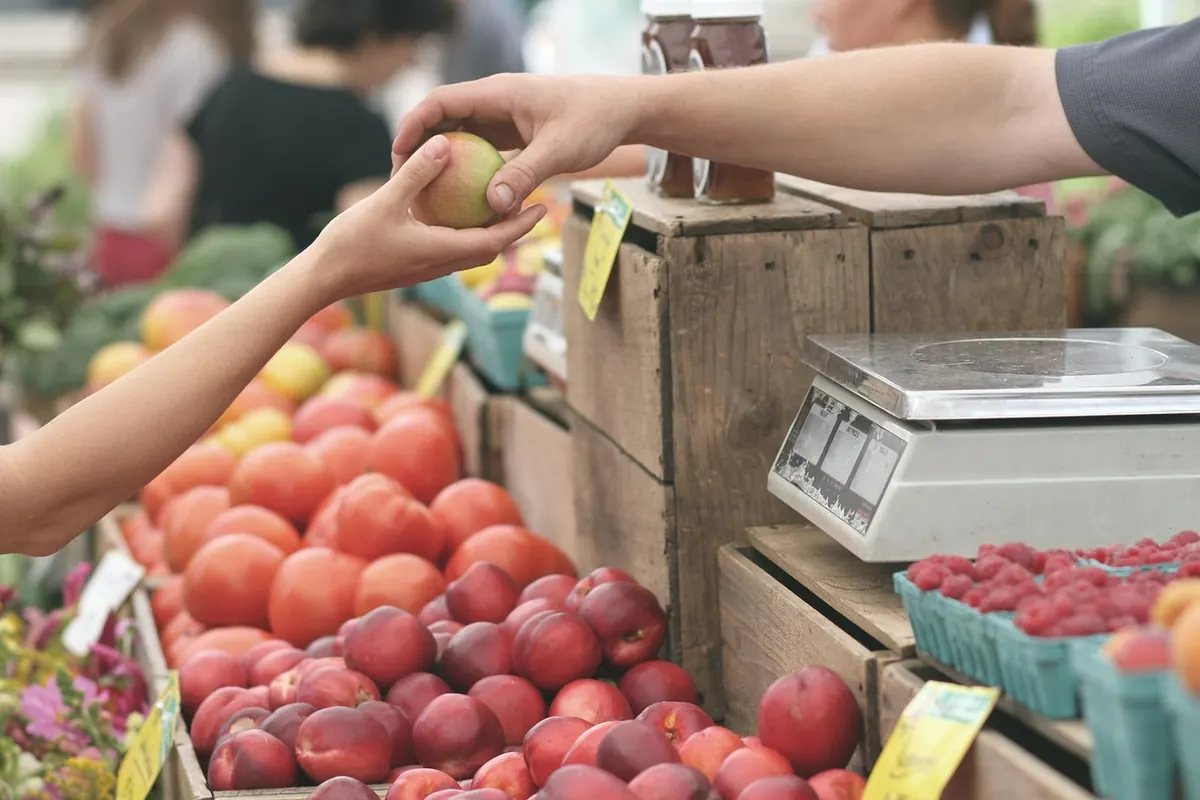
Etiquette here is not fussy, but it is specific. Greet the vendor when you arrive and wait your turn; Italians queue with reasonable discipline and notice when someone does not. Do not help yourself to the produce. Point, ask, and let the vendor choose and bag it — this is not distrust, it is how the stall works. Ask before touching, and never squeeze a peach that someone else will buy.
A handful of phrases will carry you a long way:
- Buongiorno — say it first, before anything else.
- Posso? — may I? — with a gesture towards the crate you want to inspect.
- Quanto costa? — how much is it?
- Un etto, per favore — one hundred grams, please. Italians order in etti far more often than in kilos.
- Mezzo chilo — half a kilo; un chilo — a kilo.
- È di vostra produzione? — is this from your own farm?
- Cosa mi consiglia? — what do you recommend?
The most useful question at any stall is not "how much" but "what is good today?" — it changes the whole transaction.
Haggling is out of place at a farmers' market, where prices are generally fixed and already close to the bone. Asking politely whether there is a better price on a large quantity is fine; treating the stall like a souvenir bazaar is not. Bring your own bags, and expect to pay a small amount if you need one.
Buy Less Than You Think, and Ask More Than You Speak
The classic first-timer's mistake is overbuying. A crate of tomatoes at nine in the morning looks like abundance; by Thursday it looks like a project. Buy what you will cook in three or four days, and plan a second visit rather than a second fridge. If you are buying for the freezer or for sauce, that is a different purchase — ask the vendor which varieties hold up to cooking, and they will tell you with enthusiasm.
For cheese, cured meats, honey or oil, ask for a taste before committing to a piece. A good stall will offer one anyway. Start small: a modest wedge tells you more than a lecture. And do not overlook the less photogenic specimens — the slightly irregular peppers and the small, sharp apples are often the ones grown for flavour rather than for the journey to a shelf.
Look Past the Vegetable Table
Many markets are broader than their produce stands. You may find bread baked that morning, fresh eggs, honey, olive oil, preserves, flowers, and occasionally a stall cooking something hot. Fresh pasta and soft cheeses are worth buying, but they are also the items least fond of a warm car, so bring a cooler bag in summer and go home by the shortest route. If you are pregnant or cooking for someone with a weakened immune system, ask directly whether a cheese is made from pasteurised milk before you buy it.
A Simple Plan for Your First Visit
Check the day and closing time the week before. Withdraw small notes the day before that. Arrive in the first hour with two bags, one of them insulated. Walk the whole market once without buying anything, note who has the best of what you actually want, then go back and buy. Ask each vendor one question about what you are holding. Leave before you are hungry enough to buy everything. You will spend less than you feared, eat better than you expected, and know exactly which stall to head for next week.
Photo: Pexels / Pixabay
You Might Also Like
A guide to spring foraging the way locals do it — reading the hedgerows politely, picking four reliable greens, and leaving the rest well alone.
Handwoven linens reward a little knowledge. Here are the washing, drying, and storing mistakes that quietly shorten their life — and the simple habits that keep them beautiful for decades.