Traditional Italian Coffee Rituals: A Comparison of Morning and Afternoon Habits
By half past seven the counter is three people deep and nobody is sitting. A man in a work jacket sets down a coin, drinks his coffee in two swallows, and is out the door before the cornetto behind the glass has been touched. Four o'clock that same afternoon, two streets away, a coffee arrives in a proper cup at a proper table, and it takes half an hour to drink half of it. Same drink. Different ritual. Different hour.
That contrast is the whole story of Italian coffee. The beans hardly change. What changes is the pace, the place, the words you use to order, and who you are standing next to. Knowing the difference is what turns a decent coffee in Italy into a day that runs the way it should.
Morning at the Bar: Standing, Loud, Ten Minutes Long
The first coffee is a transaction with a small social layer on top. You walk in, you greet the room with a buongiorno, and you order at the counter: un caffè. Not "an espresso", not "a single shot" — the default is espresso, and the word for it is simply coffee. The barista works three machines deep, steam hissing, and expects you to know what you want within a few seconds of reaching the front.
Morning ordering is stripped to essentials. Maybe a cornetto, maybe a macchiato, maybe a brioche held in one hand while the cup sits on the saucer. The cup is smaller than most visitors expect, the coffee hotter, and the whole event is over in roughly the time it takes to check that your wallet is still there. Sitting down at a table for that same coffee usually costs more, and in summer the price climbs again on the terrace. You are paying for the chair, not the caffeine.
Two small habits are worth copying. First, watch the person ahead of you to see whether you pay the cassa before ordering or after drinking — both systems exist, sometimes in the same street. Second, keep the receipt. A barista may ask to see it, and it is the normal way of things rather than a sign of suspicion.
The Cappuccino Cutoff, Explained Honestly
Cappuccino is a morning drink, and that is a genuine social norm rather than an invented rule for tourists. The logic is easy to follow: it is a bowl of hot milk with coffee in it, sized for breakfast, and it sits badly on a full stomach at the end of a long lunch. In the morning, with a cornetto, it is perfect. At three in the afternoon it reads as heavy and slightly out of place.
Nobody is going to throw you out. Order a cappuccino at 4 p.m. in a city centre and you will get a polite, faintly amused look and your drink. But if the aim is to eat the way locals eat, the cutoff is a useful line to hold at around eleven in the morning. After it, switch to caffè macchiato: an espresso with a stain of milk, warm foam or a single drop of cold milk, depending on whether you ask for it caldo or freddo. You keep the milk, you drop the weight, and nobody looks twice.
The Mid-Morning Break: The Second Coffee
Somewhere between half past ten and eleven, offices empty out for the pausa caffè. This is the most social coffee of the day. Colleagues go together, stand together, and the ordering is looser: un macchiato, a caffè lungo, a deca for someone who has already had two. The mood is different from the morning rush. There is room for a second round of greeting, for gossip about a delivery, for a short argument about football.
The mid-morning cup is also where you see small regional habits most clearly. In the north-east, an older customer may order a corretto — corrected with a splash of grappa or sambuca — on a cold morning, and no one blinks. In the south, the same coffee is more likely plain, taken with a glass of water and a few minutes of standing in the sun outside the door.
Afternoon: The Cup That Slows Down
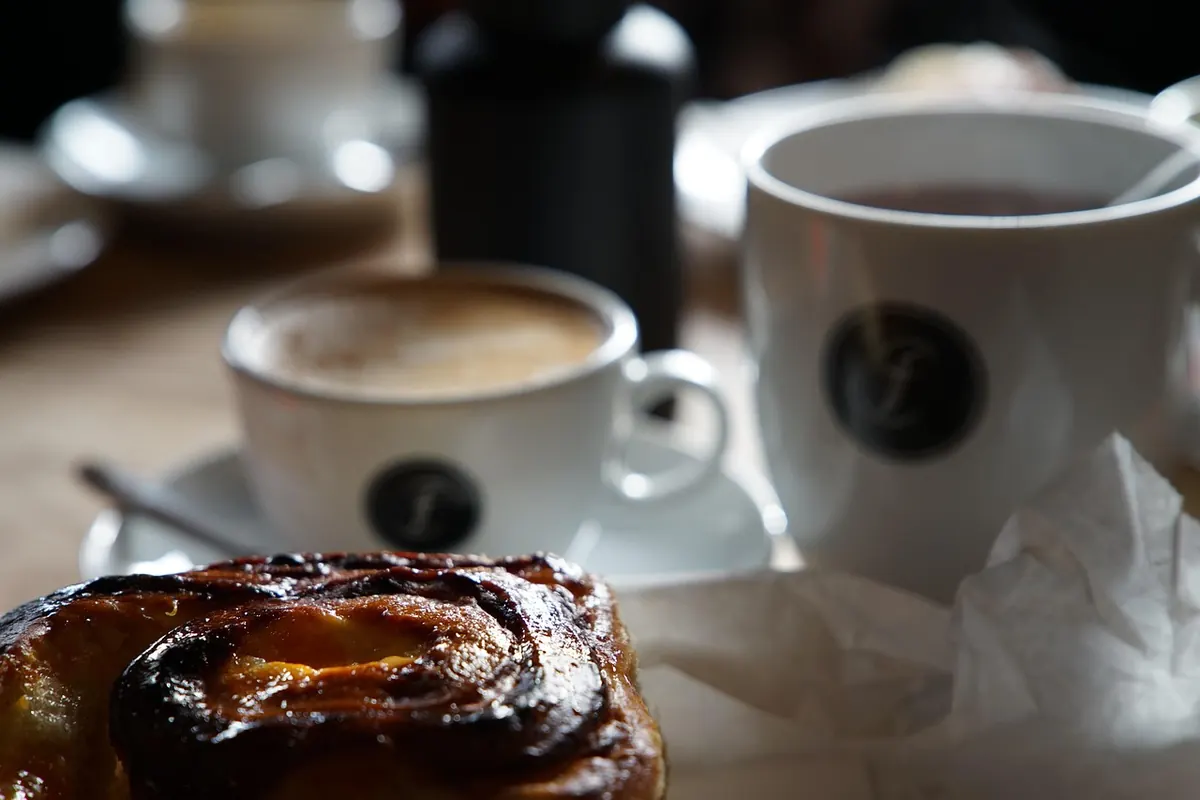
The afternoon coffee is the same liquid served at a different speed. Between three and five, the bar becomes a stopping point rather than a fuel stop. People sit. Coffees arrive at tables, sometimes with a small glass of water, sometimes with a piece of pastry nobody planned to order. A coffee can be the excuse for a walk — the classic due passi — or the reason to sit down with a friend for twenty minutes.
The drinks change with the hour and the season, too. In summer you will see caffè freddo, a sweetened cold espresso poured over ice in a glass, and shakerato, shaken hard with ice and sugar until it foams. In Sicily, ask a bar for a granita di caffè con panna and you will get something between a coffee and a dessert, spoonable and topped with cream. Turin has the marocchino, espresso layered with cocoa and milk foam. Late afternoon is also when decaffeinato stops being a strange request; a deca after four is completely ordinary.
How to Order: The Words Do the Work
Half the ritual is vocabulary. Learn six terms and you can order confidently anywhere from Trieste to Trapani.
- Un caffè — an espresso. Say it exactly like that; "espresso" marks you as a visitor.
- Macchiato — with a drop of milk. Caldo for foam, freddo for cold milk.
- Ristretto / lungo — less water or more water through the same dose of coffee. Ristretto is denser and sweeter.
- Corretto — with a splash of spirit. A cold-morning or after-dinner order, not a midday one.
- In vetro — in a glass rather than a cup. Slightly cooler, pleasant in summer.
- Deca — decaffeinated. Perfectly normal, no explanation required.
Position matters as much as vocabulary. Al banco means at the counter, faster and cheaper. Al tavolo means table service, slower and more expensive. Both are legitimate. Pick according to whether you want coffee or a pause.
After the Meal: The Moka and the Ammazzacaffè
At home the ritual is quieter and older. The moka pot goes on the stove, the coffee is poured into small cups, and lunch ends with a thimble of espresso rather than a pot of tea. The home cup is weaker and longer than a bar espresso, and nobody minds. Guests are greeted with un caffè? before almost anything else, and refusing is allowed but rarely done.
After dinner comes the ammazzacaffè — literally, the coffee-killer: a small glass of amaro, grappa or limoncello taken after the espresso to settle the meal. In some houses the coffee itself is corrected instead, and the two customs function as the same idea in different clothing. One sensible note: if caffeine keeps you awake, or you are managing a condition where it matters, a deca in the afternoon is the easy solution — and if you are unsure, ask your doctor rather than guessing.
A Short Practical Guide to a Day of Italian Coffee
- Before eleven, take your coffee standing at the counter with a cornetto. Keep it to a few minutes and keep it cheap.
- Keep milk drinks in the morning. After eleven, order a macchiato if you want milk at all.
- Use the mid-morning break socially. Go with whoever is around, stand outside, stay five minutes longer than you planned.
- In the afternoon, sit down if you can. Order something seasonal — freddo, shakerato, granita — if the heat calls for it.
- Check where to pay: cassa first or table last. Keep the receipt either way.
- Finish the day with a moka at home or an espresso and a small amaro. Small cup, no rush.
The coffee itself is almost never the point. The point is knowing which version of the ritual the hour is asking for — and then doing that version properly, without hovering at the counter at four in the afternoon wondering why the room has gone quiet.
Photo: SarahRichterArt / Pixabay
You Might Also Like
A guide to spring foraging the way locals do it — reading the hedgerows politely, picking four reliable greens, and leaving the rest well alone.
Handwoven linens reward a little knowledge. Here are the washing, drying, and storing mistakes that quietly shorten their life — and the simple habits that keep them beautiful for decades.