Common Mistakes to Avoid When Caring for Handwoven Linens
A handwoven linen tablecloth has a weight and a drape that no mill-finished cloth quite matches. You can usually see the slight irregularity of the weft, the places where a human hand pulled the shuttle across. Cloth like this can serve a family for thirty years or more. It can also be ruined in an afternoon by a hot dryer and a plastic storage bag.
The damage is rarely dramatic. There is no smoke, no alarm. Just a tea towel that becomes stiff and grey, a runner that comes out of the wash two inches shorter, a tablecloth folded away in September that opens in December with a faint brown line down the crease. All of these are avoidable. What follows are the mistakes worth knowing about before the next wash day.
Washing Mistakes That Age the Weave
The most common error is treating a handwoven piece like a hotel napkin. Very hot water, a generous scoop of powder, a long cycle, and a spin at maximum speed will clean the cloth, yes — and also shrink it, abrade the surface, and leave it creased in ways that never quite press out.
Handwoven linen is often not pre-shrunk the way industrial fabric is, which means the first hot wash can change the measurements for good. Unless you know the piece has already been washed hot many times, start cool: 30°C for colours and anything vintage, 40°C for sturdy white kitchen cloths. Linen tolerates heat better than wool, but the weave in a handloomed piece is looser and more easily distorted.
Two more habits worth breaking. First, washing after every single use. A tablecloth used for a bread-and-cheese supper does not need a full cycle; air it overnight, spot-clean what needs it, and wash after three or four uses. Second, washing linens with anything that has zips, hooks, or velcro. Those small hard edges do real damage in the drum. Give linens their own load, loosely packed — a machine stuffed full creates friction creases that set into the fibre.
For anything you are unsure about, this is a safe sequence:
- Shake out crumbs and check pockets and hems for pins.
- Treat stains before washing, always with cold water first.
- Use a mild liquid detergent, measured — not estimated.
- Choose a short, gentle cycle at 30–40°C with a low spin.
- Skip the wringing and twisting; lift the cloth out supported by both hands.
Fabric Softener, Bleach, and Other Coatings
Fabric softener is designed for synthetic fibres that build up static. On linen it leaves a film that reduces absorbency — the opposite of what you want from a kitchen towel — and can trap detergent residue that dulls the colour over time. Skip it. If a washed linen feels rough, that is usually hardness in the water or over-drying, not a lack of softener.
Chlorine bleach is the other thing to leave in the cupboard. It weakens cellulose fibres, and on linen the damage shows up months later as thin patches along folds. For white linen that has yellowed, a long soak in an oxygen-based bleach followed by a normal wash is far kinder.
Starch deserves a mention too. A light spray before pressing gives a crisp finish, but repeated heavy starching builds a brittle layer that yellows and cracks along the creases. Use it occasionally, not every wash.
Drying: Where Most Damage Happens
If there is one machine to keep handwoven linen out of, it is the tumble dryer. Heat plus tumbling equals shrinkage and surface abrasion, and a handloomed piece can lose several centimetres in both directions before you notice.
Line drying is better, with a few caveats. Peg the cloth by the hem, distributing the weight across several pegs so the fabric does not pull out of shape; heavy tablecloths are better dried flat on a clean sheet or a drying rack. Strong midday sun is a traditional and effective brightener for white linen, but leaving coloured pieces out for two days will fade them. Drape them in shade instead.
Two smaller habits matter. Do not leave washed linen sitting damp in the drum or basket — that faint musty smell is mildew taking hold in the fibre, and it is difficult to remove. And do not dry linens over a radiator; the direct heat bakes in creases and can make the cloth brittle at the contact points. If you plan to iron, take the piece off the line while it is still slightly damp.
Storing Mistakes: Plastic, Damp, and Heavy Stacks
Linens need to breathe. A sealed plastic bag or a vacuum-compressed storage sack traps any lingering moisture and holds it against the fibre for months, which is how you get mildew spots and those amber-coloured age lines that never wash out.
- Never store damp. Even slightly cool-to-the-touch counts as damp. Air the piece fully first.
- Never store dirty. Invisible food oils and sugars oxidise in storage and attract insects. Wash before putting away, not after taking out.
- Use cotton or linen bags, or a cotton pillowcase. Acid-free tissue between folds is a good extra step for heirloom pieces.
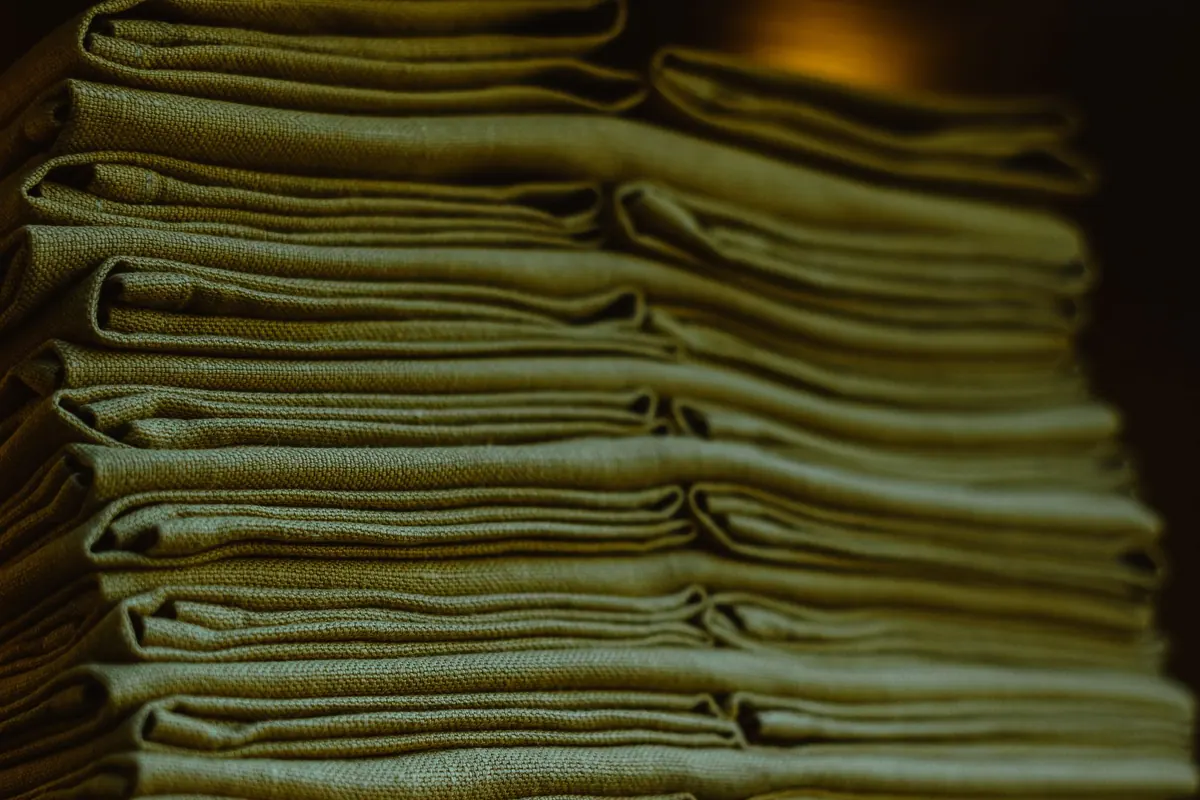
- Fold loosely and change the folds. A crease pressed into the same place for years becomes a weak line. Refold along a different axis each season, or roll heavy cloths around a cardboard tube.
- Avoid attics and damp cellars. A dry cupboard in the living space is better than an extreme environment with more room.
- Add cedar or lavender if moths have ever been a problem in your home, and replace it when the scent fades.
Ironing and Everyday Handling
Press linen on the reverse, with a hot iron and steam, while the cloth is still slightly damp. Ironing embroidery or a woven monogram face-down on a towel protects the raised threads. Avoid pressing a hard, sharp crease down the exact same line every time — a soft fold is gentler on the fibre than a knife edge.
In daily use, the small things count. Lift a hot dish rather than sliding it. Rotate your table linens so one cloth is not always taking the sunlight by the window. And resist the urge to tug at a spill the moment it happens; that is how a small mark becomes a rubbed-in patch.
Stain Panic and What to Do Instead
Most stains are made permanent in the first sixty seconds, not by the spill itself but by the response to it. Rubbing drives the substance into the weave. Hot water sets protein stains — egg, milk, sauce, blood — so use cold. Salt on red wine is a folk remedy that often sets the colour and abrades the surface; blot instead, then flush with cold water from the back of the fabric.
Work from the outside of the stain inwards so you do not spread it, test any treatment on a hem or corner first, and give a stubborn mark time. A long soak in cool water with a mild detergent, or an oxygen bleach solution for whites, will do more than five minutes of scrubbing ever will.
A Care Routine You Will Actually Keep
None of this requires a special cupboard of products. Wash less often, in cooler water, with less detergent. Dry on the line or flat, never in the drum. Store clean, dry, and loosely folded in cotton. Treat stains cold, blot rather than rub, and press on the reverse while damp.
Wash gently, dry slowly, store dry — and a handwoven cloth will outlast the table it sits on.
Ten minutes of care on wash day is the whole investment. The reward is cloth that softens with every year instead of stiffening, keeps its measurements, and still looks like something worth putting out when guests come.
Photo: Ruslan Rozanov / Pexels

You Might Also Like
A guide to spring foraging the way locals do it — reading the hedgerows politely, picking four reliable greens, and leaving the rest well alone.
A first-timer's guide to Italian farmers' markets: when to arrive, how much cash to carry, what to say at the stall, and how to buy the season without overfilling your bag.